2,500-year-old tomb of a 'warrior prince' with chariot and helmet discovered on Italy's Adriatic coast
Archaeologists have excavated a royal burial ground of the Piceni, a mysterious pre-Roman civilization in Italy that is not well-known historically.
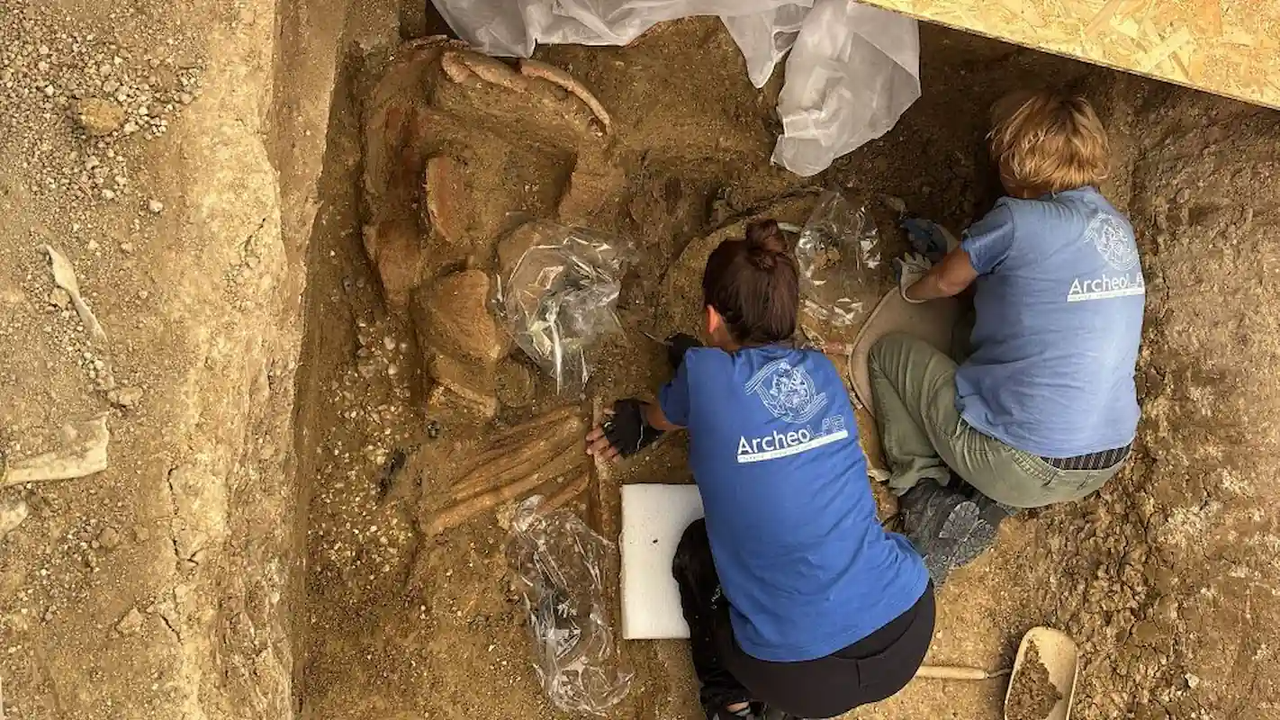
Archaeologists have excavated a royal burial ground of the Piceni, a mysterious pre-Roman civilization in Italy that is not well-known historically.
Read Full Story at Live Science →Why This Matters
The discovery of a 2,500-year-old warrior prince’s tomb along Italy’s Adriatic coast offers a rare window into the Piceni civilization, a culture whose historical obscurity has long overshadowed its role in shaping pre-Roman Italy. By revealing intricate burial rites, martial symbolism, and possible elite networks, the find challenges assumptions about Italy’s fragmented pre-classical past and underscores how much remains buried beneath modern landscapes. For archaeologists, it’s not just another grave—it’s a puzzle piece that could redefine our understanding of early Mediterranean power dynamics.
Background Context
The Piceni thrived in central-eastern Italy between the 9th and 3rd centuries BCE, yet their legacy was largely erased by Rome’s expansion. Unlike the Etruscans or the Greek colonies of Magna Graecia, the Piceni left scant written records, forcing scholars to rely on fragmented artifacts and later Roman accounts that often dismissed them as peripheral. Their territory, stretching from the Adriatic to the Apennines, may have been a cultural crossroads where Italic, Celtic, and Adriatic influences converged—making this discovery a potential Rosetta Stone for decoding Italy’s pre-unification mosaic.
What Happens Next
Radiocarbon dating and isotopic analysis of the skeletal remains and artifacts will likely reveal the warrior’s origins, diet, and possible migrations, while genetic studies could trace connections to other Italic groups. The chariot’s design might hint at trade routes with the Greek or Celtic worlds, while the helmet’s style could refine timelines for Piceni metallurgy. Meanwhile, conservation efforts will be critical—the Adriatic’s humid climate threatens organic materials like wood and leather, which could provide unprecedented insights into ancient craftsmanship.
Bigger Picture
This discovery aligns with a broader renaissance in Mediterranean archaeology, where advanced technologies are unearthing forgotten civilizations once relegated to footnotes. It also reflects a growing emphasis on Italy’s ‘dark ages’—the centuries between the Bronze Age collapse and Rome’s rise—as a period of rich, if volatile, cultural exchange. As funding for pre-Roman archaeology increases, similar finds could emerge, gradually rewriting the narrative of Italy’s formative years and challenging the dominance of classical antiquity in historical memory.




