NASA’s Chandra Examines Milky Way at Arms’ Length
A new result using NASA’s Chandra X-ray Observatory shows that the outer spiral arms in the Milky Way galaxy may reach wider than previously thought. This finding may lead astronomers to adjust their
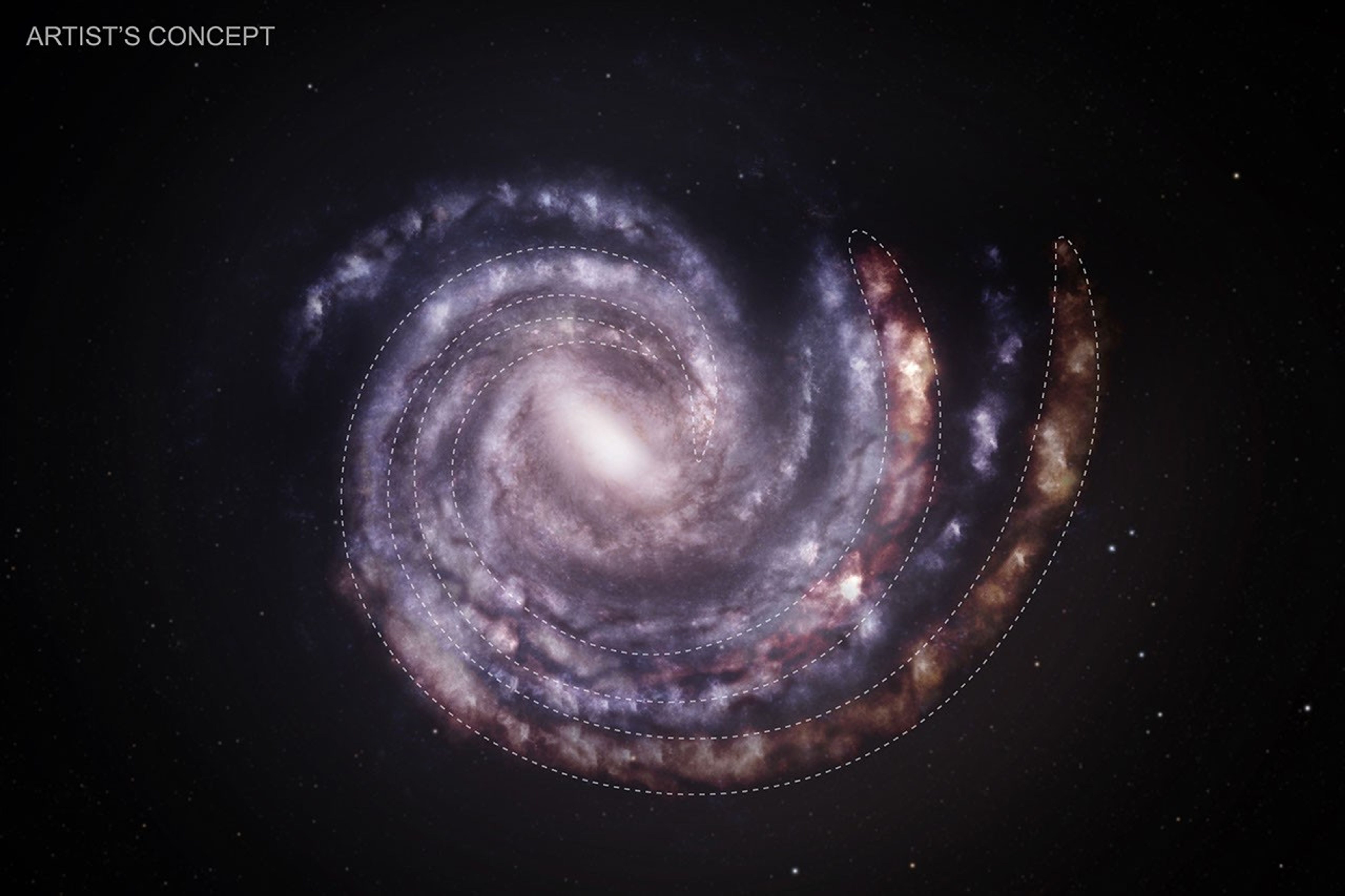
A new result using NASA’s Chandra X-ray Observatory shows that the outer spiral arms in the Milky Way galaxy may reach wider than previously thought.
Read Full Story at NASA →Why This Matters
The revelation that the Milky Way’s spiral arms may extend farther than previously mapped challenges fundamental assumptions about our galaxy’s structure, reshaping how astronomers model galactic formation and evolution. This adjustment could force a reevaluation of how stars, gas, and dark matter distribute themselves in the Milky Way, altering simulations of its gravitational interactions with neighboring galaxies. For the broader public, it underscores the dynamic and still-mysterious nature of the cosmos, where even our cosmic backyard remains partially uncharted.
Background Context
Decades of observation have relied on optical and radio telescopes to trace the Milky Way’s spiral arms, but these methods struggle with dust clouds that obscure visible light and scatter radio waves. X-ray telescopes like Chandra pierce this veil, revealing high-energy phenomena that outline the galaxy’s structure in ways infrared or radio surveys cannot. The new findings build on earlier Chandra studies of the Milky Way’s central region, suggesting that its outskirts—once thought to be sparsely populated—may harbor unexpected complexity.
What Happens Next
Follow-up observations with Chandra and next-generation telescopes like the upcoming *XRISM* mission will refine these measurements, potentially confirming whether the extended arms are a permanent feature or a temporary distortion. Astronomers may also revisit models of the Milky Way’s interaction with the Magellanic Clouds, as a wider galactic disk could alter predictions of their orbital paths. Meanwhile, citizen science projects could play a role in validating these findings by crowdsourcing data on star distributions.
Bigger Picture
This discovery fits a broader pattern of astronomical reinterpretation, where each technological leap—from Galileo’s telescope to modern space observatories—has forced humanity to shrink its perceived centrality in the universe. It also highlights the growing importance of multi-wavelength astronomy, where X-ray, radio, and optical data must converge to paint a complete picture of galactic structures. As missions like *Gaia* and *JWST* continue to reshape our understanding, the Milky Way’s outer reaches may soon feel as familiar as its core.