Preparations Underway for Funeral of Iran’s Supreme Leader
Massive crowds are expected to gather for a dayslong funeral for Iran’s former Supreme Leader, Ali Khamenei, who was killed in a U.S. strike on the first day of the war.
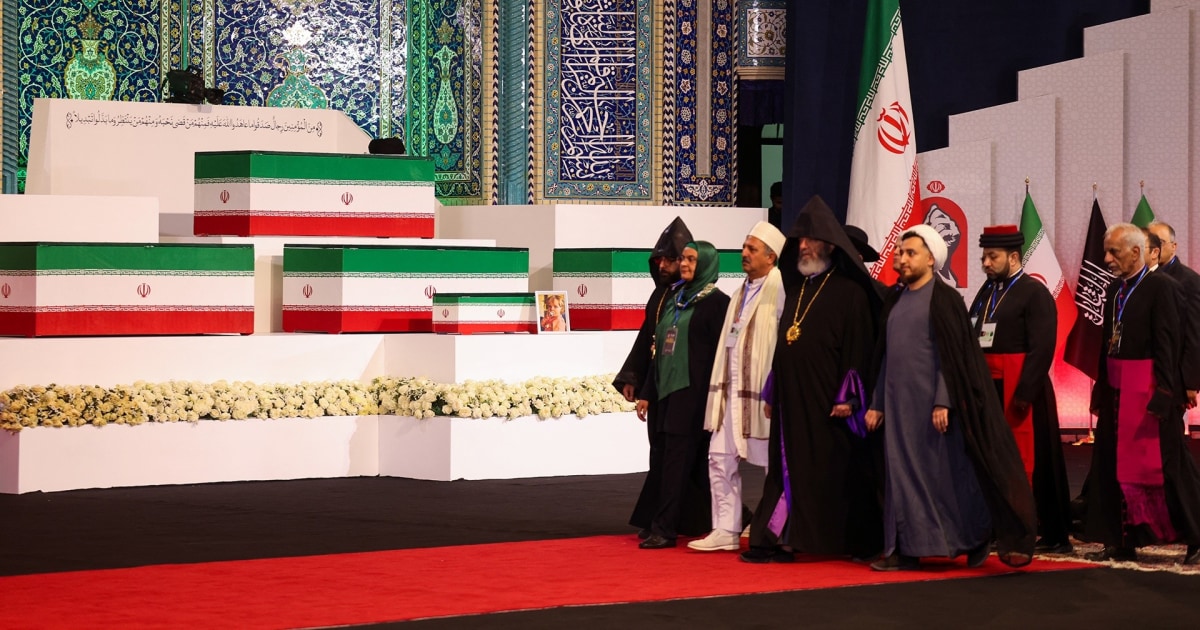
Massive crowds are expected to gather for a dayslong funeral for Iran’s former Supreme Leader, Ali Khamenei, who was killed in a U.S. strike on the fi
Read Full Story at NBC News →Why This Matters
The funeral of Iran’s Supreme Leader will serve as a defining moment for the Islamic Republic’s legitimacy, testing the regime’s ability to maintain cohesion amid grief and political uncertainty. Beyond mourning, the event will expose the fault lines within Iran’s power structure, particularly between hardliners and reformists, as factions jockey for influence in a post-Khamenei era.
Background Context
Khamenei’s nearly 35-year tenure as Supreme Leader was marked by the expansion of Iran’s regional proxy network, from Lebanon to Yemen, while domestic dissent was systematically suppressed. His death follows a dramatic escalation in tensions with the U.S., including direct strikes on Iranian soil—a shift from decades of indirect confrontation through proxies.
What Happens Next
The succession process will unfold under intense scrutiny, with the Assembly of Experts expected to ratify a successor within days, though internal debates over reformist-leaning candidates versus hardline clerics could delay consensus. Regional allies like Hezbollah and Hamas may recalibrate their strategies, while domestic protests—or crackdowns—could reshape Iran’s political landscape.
Bigger Picture
This moment underscores Iran’s vulnerability to sudden leadership transitions, a pattern that has historically led to internal power struggles, as seen in the 1989 succession after Khomeini’s death. The funeral’s global optics will also test whether the regime can project stability despite the unprecedented direct strike on its leadership.






